



Blogs
What are the Popular Embroidery Techniques?

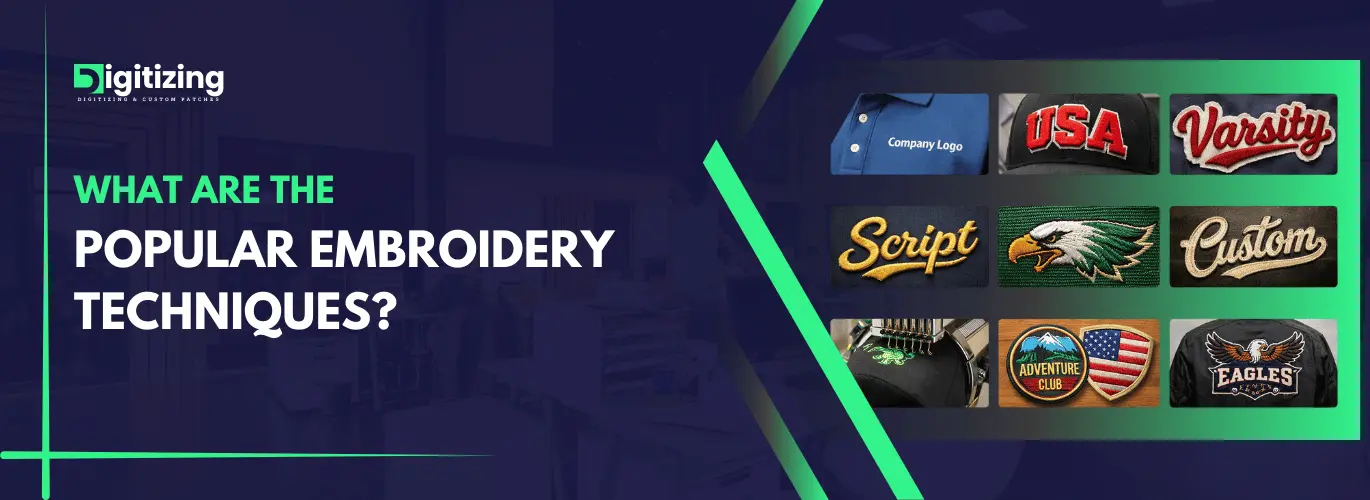
A timeless craft of decorating a fabric with needle and thread is called embroidery. The creative technique has been around for centuries and people have been using it from the ancient times. The process employs various techniques and methods to create amazing designs. From the conventional hand-stitching mode to present day, contemporary digital embroidery; the purpose of embroidery is to deliver great artistic expression and interpret cultural heritage. Practiced globally across many cultures, it has evolved from traditional forms to modern machine embroidery, making it accessible for both artisans and hobbyists. Whether you want to embellish clothing, creating distinctive home decor or simply enjoying a relaxing yet creative hobby, embroidery offers endless possibilities of arts and crafts. In this blog, we will discuss the different embroidery techniques and their benefits.
Understanding Digitizing in CAD
Digitizing in CAD refers to the transformation of a design into a digital, machine-readable file. It involves specialized software to generate a series of stitch commands for an embroidery machine to digitize an artwork. The process brings great precision and control in creating embroidered designs that are not possible with the traditional embroidery techniques. Following digital embroidery, digitizers are allowed to produce accurate and consistent results. However, embroidery digitizing requires professional expertise, high skill set and specialized software to get the job done efficiently and cost-effectively.
The Essential Embroidery Techniques
To master the art of needle work, you need to understand the basic embroidery techniques. By doing so, you will learn the various techniques of embroidery, stitch types, distinct characteristics and their beneficial applications to create diversified patterns. Here are some worth mentioning embroidery techniques:
- Cross Stitch: The form of needle work that fabricates X shaped stitches to fill designs in a raster-like, tiled form.
- Running Stitch: The most versatile and basic form of stitches in embroidery. A running stitch involves weaving the needle in and out of the cloth to create a dashed pattern. Commonly, this type of stitch is used for simple patterns, outlines and filling shapes.
- Backstitch: A backstitch works ideal for outlining text and writing with solid lines, following a straight line. To create a backstitch, bring the needle up through the cloth, then again back it down and finally back it up through the fabric, a stitch length away from the starting point.
- Satin Stitch: A satin stitch is perfect for filling in shapes and areas. It creates solid and smooth areas of colour for a silky thread coverage. The technique involves creating parallel stitches and close spaces to cover the fabric completely.
- French Knot: It delivers an enhanced decorative element to your embroidery project. To make a French knot, wrap the thread around the needle and push the needle back into the cloth, close to the starting point.
- Chain Stitch: Resembling a chain pattern, a chain stitch works perfect for adding thick borders and decorative outlines to a design in a series of looped stitches.
Exploring Advanced Embroidery Techniques
Advanced embroidery techniques enable your embroidery projects to meet the level of perfection. Here are some advanced techniques for embroidery:
- Raised Embroidery: Also known as stumpwork, the technique involves creating raised, three-dimensional elements with padding. The 3D impact stands out from the cloth surface to bring an arresting effect.
- Blackwork: This technique originated from Spain. It uses black thread to generate intricate monochrome and geometric patterns for an elegant look.
- Goldwork: This technique uses metallic threads for a dramatic yet luxurious impact to any cloth. The technique was traditionally popular for adding sparkle and elegance to royal insignia and regal garments.
- Needle Painting: Also known as silk shading, it brings a brushstroke effect to the artwork. It uses threads to draw a realistic picture that give an upshot of thread painting.
Choosing the Right Embroidery Techniques for Your Business
Executing the most appropriate embroidery technique for your business is crucial, if you want to get the best results in terms of quality, durability and aesthetic sense. The most appropriate embroidery techniques offer specific advantages for certain designs and fabric types. So, it is good to understand these and their significant impact on various concerning factors. So, before picking the right technique for your work, it is essential to learn its impact on your embroidery operation and your business. Here are some important factors to consider:
Design Complexity
For more complex designs with multiple colour schemes and intricate details, digital embroidery may be a better choice over traditional one. Digital technique for embroidery brings consistent and more precise stitching, for even the most elaborated artwork. Although conventional embroidery technique offers a different precision level, but it delivers a unique and beautiful handcrafted visibility.
Production Time
To meet a close and tight deadline, digital embroidery makes a better choice in comparison with traditional methods that are labour-intensive and more time-consuming. Digital embroidery techniques allow fast turnaround and high efficiency.
Quality Control
Quality control and assurance is very crucial for any embroidery project, irrespective of the work technique used. Although, digital embroidery infuses great precision and stitching consistency to yield higher-quality products. On the contrary, conventional embroidery technique demands high skill set and expertise, resulting in inconsistency and variations. Hence, the best embroidery techniques for businesses and individuals depend upon their specific needs and goals. Whether it is to carry out conventional embroidery, digital embroidery or embroidery digitizing, the objective is to yield high-quality outcomes.
Conclusion
Understanding the various embroidery techniques can help individuals and businesses to choose the best one. Digitizing in CAD delivers high precision and great control for design creation, while conventional techniques bring a high level of individuality and unique craftsmanship. Modern digital embroidery technique provides high efficiency, fast turnaround and cost saving. Embroidery digitizing, on the other hand; offers efficiency and accuracy without compromising on a classic, handcrafted look. So, by considering your business circumstances and deciding factors, you can easily choose the most appropriate embroidery technique.